

I’ve always admired bold moves that cut through red tape, especially in places like Argentina where economic headaches have piled up for decades. Javier Milei’s government just dropped an administrative order that exempts certain funds flowing through Virtual Asset Service Providers from that pesky 1.2 percent tax. It directly helps everyday users who deposit or withdraw fiat currency to and from these VASPs. No more automatic skim off the top for those transactions, at least for regulated players.
This feels like a breath of fresh air. Argentina has wrestled with inflation, capital controls, and distrust in traditional finance for years. Crypto became a lifeline for many—people dodging peso volatility or sending remittances without insane fees. Yet taxes like this one acted as hidden barriers, discouraging wider adoption. By carving out exemptions for properly registered VASPs with the CNV, Milei’s team is signaling they want legitimate crypto activity to thrive, not hide in the shadows.




I chatted with a contact in the Latin American fintech scene yesterday. He put it simply: Finally, they get it. Users win because every little saving compounds when you’re moving money often. Platforms can now compete better on cost, and it levels the playing field with regular banking.
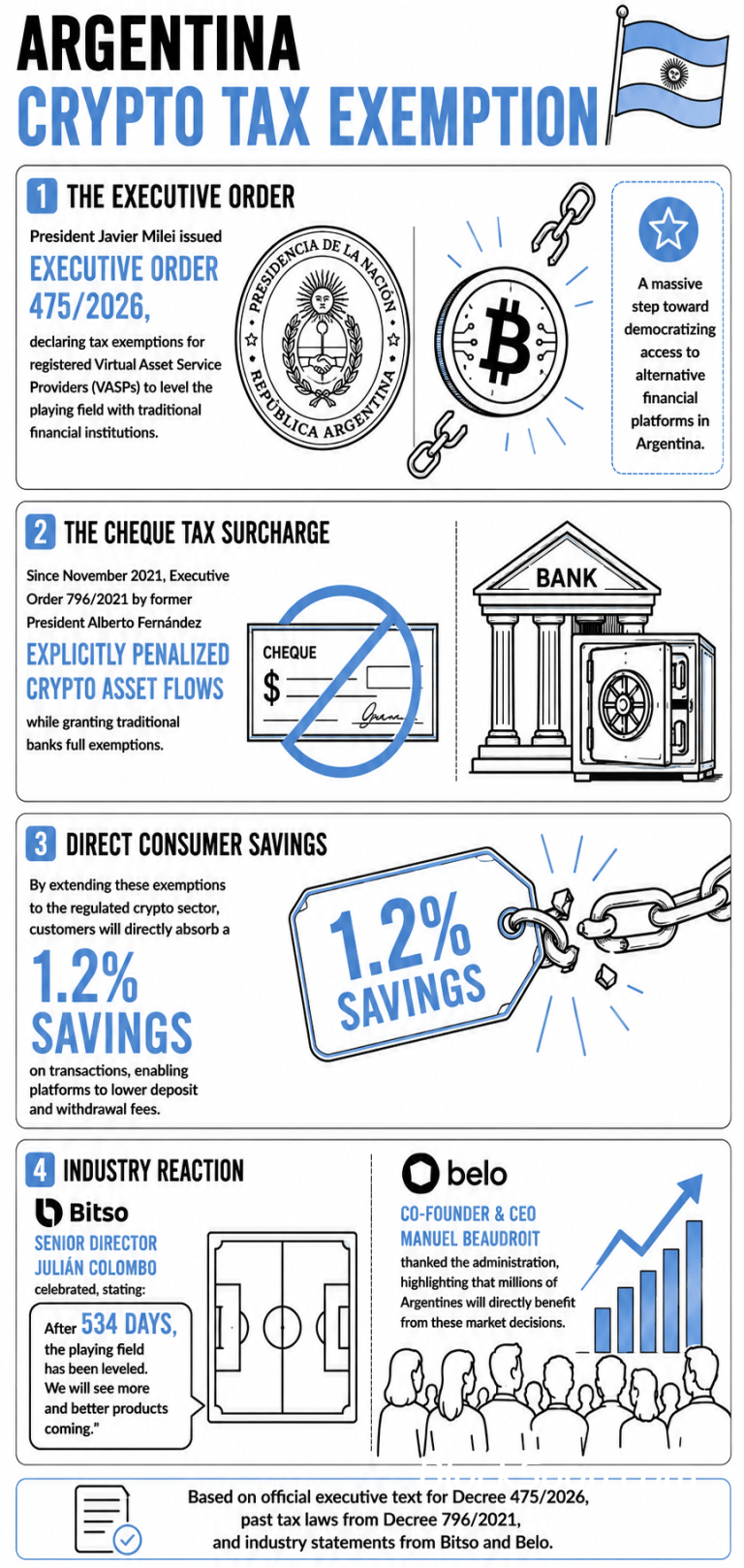
Here’s what stands out in the practical impact:
- Registered VASPs see their dedicated bank accounts freed from the 1.2 percent levy on inflows and outflows.
- Users avoid extra costs when topping up or cashing out in pesos.
- It encourages more companies to register and follow rules instead of operating informally.
- Broader fintech and payment operators get similar breathing room.
I keep thinking about the bigger shift here. Milei ran on slashing government overreach, and this fits the pattern—targeted relief that supports innovation without blanket chaos. It doesn’t solve every economic woe overnight, but it chips away at the friction that drives people toward black-market options. In a country where trust in institutions runs low, making digital finance cheaper and cleaner builds confidence step by step.
Of course, not everyone cheers. Critics might worry about lost revenue or potential loopholes for misuse. Fair points. Strong supervision remains essential to prevent bad actors from exploiting the space. Still, this measured exemption strikes me as smarter than heavy-handed taxes that chase activity elsewhere. I’ve watched neighbors in the region experiment with crypto rules, and Argentina’s approach under Milei feels pragmatic—pro-growth while staying vigilant.
Picture a small business owner in Buenos Aires. She used to hesitate before moving funds through a VASP because of that extra cut. Now? Smoother operations, lower costs, more focus on actual work. Or an expat sending support home. Every peso saved matters when inflation bites hard. These real-world wins accumulate and could accelerate crypto’s role in everyday finance.
The move also aligns with Milei’s wider push for deregulation. From labor reforms to investment incentives, the goal seems consistent: reduce obstacles so people and businesses can breathe. Crypto enthusiasts have waited for signals like this. It won’t turn Argentina into a overnight hub, but it removes one notable drag and invites serious players to engage.
What surprises me most is the timing. With global regulators still tightening screws in many places, Argentina is choosing facilitation for compliant operators. That could draw talent and capital if executed well. I hope they follow through with clear guidance so smaller VASPs aren’t left guessing.
This kind of policy reminds me why I track these developments closely. They’re not abstract—they touch wallets, opportunities, and financial freedom for regular folks navigating tough economies.