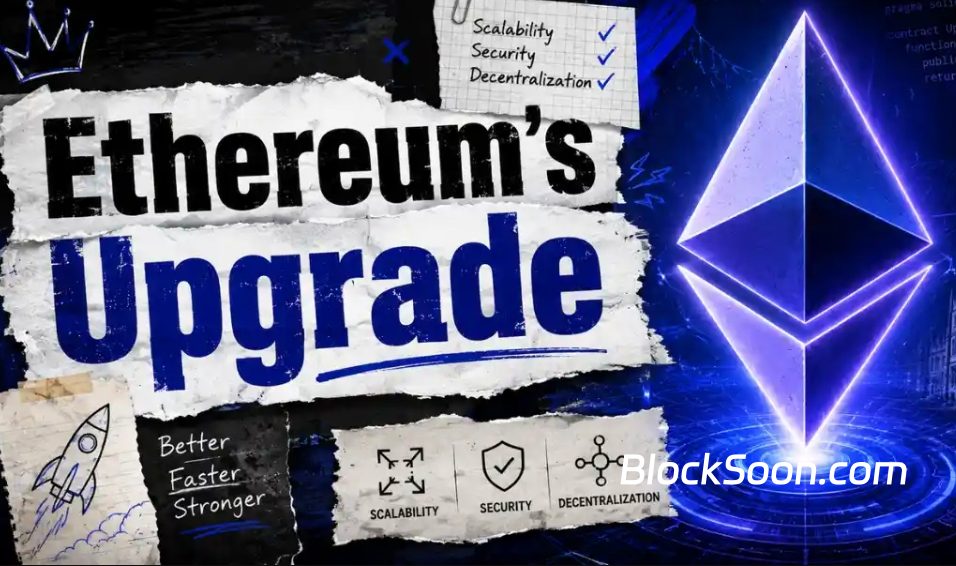
The crypto market loves giving with one hand and taking away with the other. Just when we were celebrating some massive regulatory breakthroughs for Ethereum, the tech stack reminded us that decentralized infrastructure is incredibly hard to build. The long-awaited mainnet Glamsterdam upgrade delay is officially here, pushing the timeline out to the end of the third quarter, and it is hitting market sentiment right where it hurts.
We were all banking on this hard fork to finally introduce parallel transactions and slash those brutal Layer-1 gas fees.




Instead, we are stuck waiting, and the timing could not be worse.
With the upgrade stuck in limbo, a massive structural worry is creeping back into the narrative: Layer-2 networks are going to keep eating Ethereum’s lunch. Because L1 gas fees aren’t dropping anytime soon, users and dApps are migrating to L2s at an alarming rate, capturing value that used to burn ETH and accrue directly to the mainnet.
Now, the spot market is reacting to this technical bottleneck, forcing the Ethereum price down to test a critical 1,650 USD support level.
I was hopping onto a Discord call with a DeFi developer this morning, and his frustration perfectly mirrors what the community is feeling right now:
-
He said: We delayed our mainnet deployment because we were counting on Glamsterdam’s parallel processing to make our smart contracts economically viable. Now we have to rewrite our roadmap for an L2 chain.
-
My response: That is exactly the leakage problem. Every month this upgrade gets pushed back, Ethereum loses more of its economic moat to Base, Arbitrum, and Optimism.
This delay exposes a fundamental tension in how we value blockchain ecosystems.
-
The Revenue Leakage: When economic activity moves to L2s, mainnet gas consumption plummets. Less gas burned means less ETH gets taken out of circulation, completely disrupting the deflationary supply schedule.
-
The Fragmented Liquidity: Delaying parallel transaction capabilities on the mainnet forces liquidity to scatter across dozens of isolated layer-2 bridges, worsening the overall user experience.
-
The Support Line Battle: If the Ethereum price breaks below that psychological 1,650 USD support, automated liquidations from DeFi lending protocols could trigger a much larger flush.
It is a sobering reminder that regulatory victories mean nothing if the underlying network architecture cannot scale in time to handle the demand.
Wall Street might have the green light to buy Ethereum, but institutional allocators are smart enough to look at network fundamentals. They want to see fee generation and high transaction throughput on the core ledger, not a fragmented ecosystem where value leaks out to secondary chains. The Glamsterdam pushback essentially puts Ethereum’s valuation expansion on pause for the next few months.
If you are holding spot ETH, this isn’t a reason to panic-sell, but it is a cue to adjust your short-term expectations. The next few weeks are going to be a grueling battle of patience. We need to watch how the network holds that 1,650 USD support line like our portfolios depend on it, because until the core dev team delivers a solid testnet deployment for Glamsterdam, the bears are going to keep controlling the short-term narrative.