You’ve asked yourself this before, right? What if I just threw in a hundred bucks and forgot about it… would it turn into something life-changing, or just another missed opportunity? Everyone talks about Bitcoin’s past gains, but nobody really sits down and walks through what the next 20 years could actually look like.
That curiosity is where most people start, and where most people get misled.


The straight answer: how much will $100 of Bitcoin be worth in 20 years
The future value of $100 invested in Bitcoin over 20 years depends on Bitcoin’s long-term price growth rate, market adoption, and macroeconomic conditions. If Bitcoin continues historical growth trends, $100 could range from a few hundred dollars to tens of thousands. Conservative estimates based on slower growth suggest $500 to $2,000, while aggressive scenarios assuming mass adoption and scarcity could push values beyond $10,000 or more.
Why Bitcoin’s past doesn’t guarantee your future returns
A lot of people anchor on one thing: Bitcoin went from cents to tens of thousands. That’s true, but that phase was discovery. Early adoption, zero regulation, massive inefficiencies. That environment doesn’t repeat.
The next 20 years look very different. Bitcoin is no longer an experiment, it’s an asset class. Institutions are involved, liquidity is deeper, and price movements are more structured. Growth still exists, but it follows a more mature curve.
When you ask how much will $100 of Bitcoin be worth in 20 years, you’re not asking about hype cycles. You’re asking about long-term compounding under a more efficient market.
Structured answer: realistic Bitcoin growth scenarios
The future value of a $100 Bitcoin investment depends on compound annual growth rate assumptions. At 5 percent annual growth, $100 becomes around $265 in 20 years. At 10 percent, it grows to about $670. At 20 percent, it reaches over $3,800. Extreme bullish scenarios exceeding 30 percent annual growth can push the value beyond $19,000, though such rates are difficult to sustain long term.
Breaking down Bitcoin growth scenarios over 20 years
Let’s put numbers into perspective instead of guessing blindly.
If Bitcoin grows at a conservative pace, similar to gold or large-cap assets, you’re looking at modest returns. Your $100 becomes a few hundred dollars. That’s not exciting, but it’s stable.
If Bitcoin maintains mid-level growth, driven by continued adoption and limited supply, then your $100 starts compounding meaningfully. This is where most realistic projections sit, assuming Bitcoin continues to function as digital gold.
Now take the aggressive case. If Bitcoin becomes a global reserve asset or absorbs a significant portion of global wealth storage, then the upside expands dramatically. That’s where those five-figure outcomes come from.
Each scenario depends on one thing: how big Bitcoin becomes relative to the global financial system.
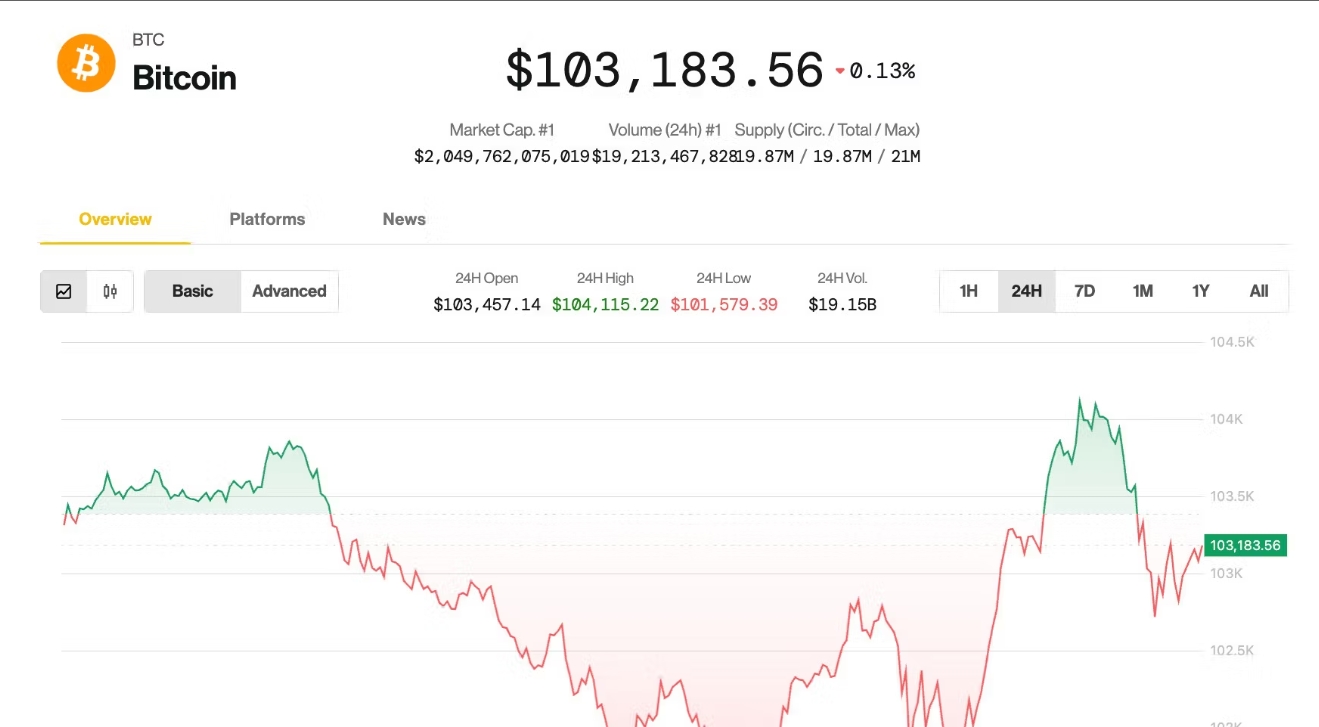
What actually drives Bitcoin value over 20 years
Price doesn’t move randomly over decades. There are structural forces behind it.
Adoption is the biggest one. The more individuals, institutions, and even governments hold Bitcoin, the higher the demand pressure against a fixed supply. That supply cap of 21 million coins is what creates long-term scarcity.
Then you have macro conditions. Inflation, currency debasement, capital controls. These push people toward alternative stores of value. Bitcoin benefits directly from that shift.
Finally, there’s infrastructure. Exchanges, custody solutions, regulation clarity. These make Bitcoin easier to access, which directly affects price appreciation.
All of these factors combine into one equation: demand increasing against a capped supply.
Structured answer: key drivers of Bitcoin future value
Bitcoin’s long-term value is driven by adoption rate, institutional participation, macroeconomic instability, and its fixed supply mechanism. Higher global acceptance and stronger demand relative to supply constraints increase the probability of significant price appreciation over multi-decade periods.
A real story from the market trenches
Back in the earlier cycles, I watched people ignore Bitcoin at a few hundred dollars. Not because they didn’t have money, but because they didn’t have conviction. Fast forward a few years, those same people were buying at ten thousand, then panic selling during drawdowns.
One guy I knew put in a small amount, something like a few hundred dollars, and just left it. No trading, no overthinking. Years later, that position outperformed most active traders who tried to outsmart every move.
The lesson wasn’t about timing. It was about holding through noise.
When you ask how much will $100 of Bitcoin be worth in 20 years, you’re really asking if you can sit still long enough to find out.
The hidden factor: your behavior matters more than price
Even if Bitcoin performs well, most people won’t capture that full growth.
They sell early. They panic during crashes. They chase new trends and abandon long-term positions. Behavior erodes returns more than bad timing ever could.
Holding Bitcoin for 20 years sounds easy in theory. In practice, it means sitting through multiple crashes, regulatory scares, and market cycles.
The real edge is not prediction. It’s endurance.
Structured answer: investor behavior impact
Long-term Bitcoin returns depend not only on price growth but also on investor behavior. Frequent trading, emotional decision-making, and lack of discipline reduce realized gains. Investors who maintain long-term positions are more likely to capture the full compounding effect.
How to actually invest $100 in Bitcoin the right way
If you’re serious about this, the process itself matters less than the discipline behind it, but execution still needs to be clean.
You create an account on a reputable exchange such as Binance or OKX, complete identity verification, deposit funds using your preferred payment method, navigate to the Bitcoin trading pair, place a market or limit order for your desired amount, then transfer the purchased Bitcoin to a secure wallet if you plan to hold long term.
That’s the mechanical part. The real decision is whether you leave it untouched.
Is $100 even enough to matter in the long run
Here’s the honest take. $100 alone won’t change your life unless Bitcoin reaches extreme valuations.
But it does something more important. It gets you into the market. It gives you exposure, skin in the game, and a reason to pay attention.
Many long-term holders didn’t start big. They started small and added over time.
The question isn’t whether $100 is enough. The question is whether you’re consistent.
FAQ: what people keep asking about Bitcoin long-term value
Will Bitcoin still exist in 20 years?
Bitcoin’s survival depends on network security, adoption, and relevance as a store of value. Given its decentralized structure and growing institutional interest, the probability of long-term existence is strong, though not guaranteed.
Can Bitcoin reach extreme prices in the future?
Bitcoin can reach very high valuations if it captures a significant share of global wealth storage or becomes widely used as a financial reserve asset. This outcome depends on adoption, regulation, and macroeconomic trends.
Is it better to invest once or keep buying over time?
Investing regularly over time reduces the impact of volatility and timing risk. This approach, often called dollar-cost averaging, allows investors to build positions gradually while smoothing entry prices.
What is the biggest risk to Bitcoin long-term growth?
Major risks include regulatory restrictions, technological vulnerabilities, loss of adoption momentum, and competition from alternative assets or systems that offer similar value propositions.
Final take from someone who’s seen cycles come and go
The real question isn’t how much $100 of Bitcoin will be worth in 20 years.
It’s whether you’ll still be holding it when that day comes.
Because in this market, patience pays more than prediction.