Every bear market has its scary prediction.
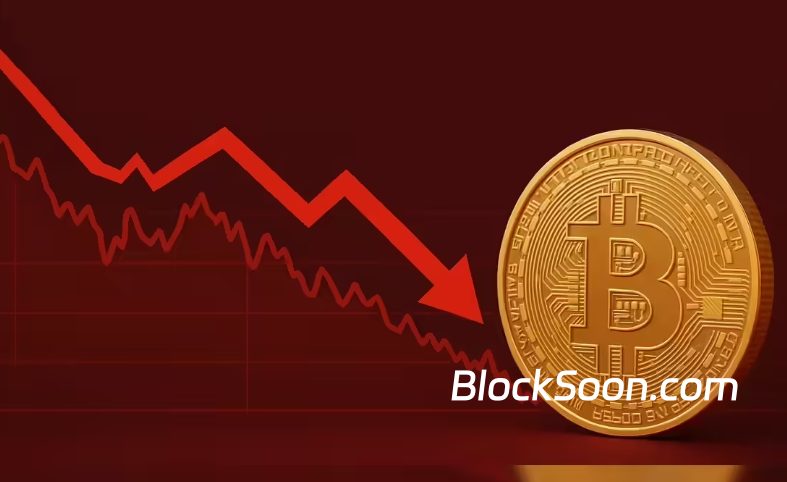
This week, that number is $23,979.




Crypto analyst Jesse Olson sparked a heated debate after warning that Bitcoin could plunge toward the $24,000 area if U.S. stocks experience a brutal 50% correction. His argument is built around the historical relationship between Bitcoin and the S&P 500, which currently shows a correlation coefficient near 0.468.
At first glance, it sounds reasonable.
Stocks collapse.
Liquidity disappears.
Risk assets get crushed.
Bitcoin follows.
Simple.
Maybe a little too simple.
Correlation Is Not Destiny
One mistake I see investors make repeatedly is treating correlation like a law of physics.
Markets do not work that way.
A correlation of 0.468 means Bitcoin and equities have moved together at times. It does not guarantee they will continue moving together under every future scenario.
I remember hearing similar arguments in previous cycles.
When Bitcoin traded around $16,000, many analysts projected a fall to $10,000.
When it reached $30,000, some predicted a return to $12,000.
The market rarely rewards the most obvious narrative.
What makes this situation interesting is that Bitcoin today is fundamentally different from Bitcoin three or four years ago.
Spot Bitcoin ETFs exist.
Public companies hold BTC on their balance sheets.
Large asset managers have exposure.
Institutional participation is no longer a theory.
It is reality.
The Whale Data Tells a Different Story
While social media focused on the crash prediction, another piece of information received far less attention.
Large Bitcoin holders accumulated nearly 40,000 BTC during the previous week.
That is not the behavior I would expect if sophisticated capital believed a catastrophic collapse was around the corner.
Think about it.
If major investors truly anticipated a move toward $24,000, why aggressively buy now?
Why not wait?
Why absorb supply during a period of uncertainty?
This is exactly why many market participants pushed back against the bearish forecast.
Benjamin Cowen and several other respected voices pointed toward on-chain activity rather than hypothetical stock market scenarios.
The blockchain records what investors actually do.
Twitter records what people say they might do.
I generally trust the former more than the latter.
A Conversation Happening Across Crypto Twitter
The debate almost feels like this:
Bear: Stocks could fall 50%. Bitcoin follows and drops to $24,000.
Bull: Whales just bought 40,000 BTC.
Bear: Macro conditions are deteriorating.
Bull: Then why is long-term capital accumulating?
Bear: Fear is rising.
Bull: Fear usually rises near bottoms, not tops.
Neither side has perfect information.
That is what makes markets fascinating.
Geopolitics Is Adding Fuel to the Fear
Recent geopolitical tensions have certainly increased uncertainty.
Investors are watching every headline.
Energy markets remain sensitive.
Treasury yields remain elevated.
The U.S. dollar continues attracting capital.
Those factors matter.
Yet there is another angle many traders ignore.
Every major geopolitical shock over the past decade eventually forced central banks and governments to consider economic support measures.
Liquidity may disappear temporarily.
It rarely disappears forever.
Bitcoin has survived wars, banking crises, inflation scares, exchange collapses, and regulatory crackdowns.
The asset has a habit of frustrating both extreme bulls and extreme bears.
What Would Need to Happen for $23,979 Bitcoin?
For Bitcoin to revisit the $24,000 zone, several things would likely need to occur simultaneously:
- A severe U.S. stock market crash
- Persistent ETF outflows
- A sharp contraction in global liquidity
- Large-scale whale distribution
- Significant deterioration in investor confidence
Right now, some of those conditions exist.
Most do not.
The whale accumulation data alone challenges the idea of imminent collapse.
That does not mean Bitcoin cannot fall further.
It absolutely can.
Volatility is part of the asset’s DNA.
The difference is between expecting a correction and expecting an extinction-level event.
Those are not the same thing.
My Take
I find it useful to ask a simple question whenever dramatic price targets appear.
Who is buying while everyone else is arguing?
At the moment, the answer appears to be large holders.
That does not guarantee higher prices tomorrow.
It does suggest that some of the smartest money in the room sees value at current levels.
Fear can create opportunity.
Panic can create mispricing.
History shows that Bitcoin often looks weakest just before sentiment begins to turn.
The market may continue to struggle in the short term.
A drop remains possible.
A crash remains possible.
But a straight-line collapse to $23,979 feels far less convincing when long-term capital is quietly accumulating thousands of coins behind the scenes.