Crypto traders have a habit of believing the market is the center of the financial universe.
Then something changes.




Money starts flowing somewhere else.
Prices stall.
Volumes shrink.
And suddenly everyone wonders why Bitcoin, Ethereum, and altcoins cannot find momentum.
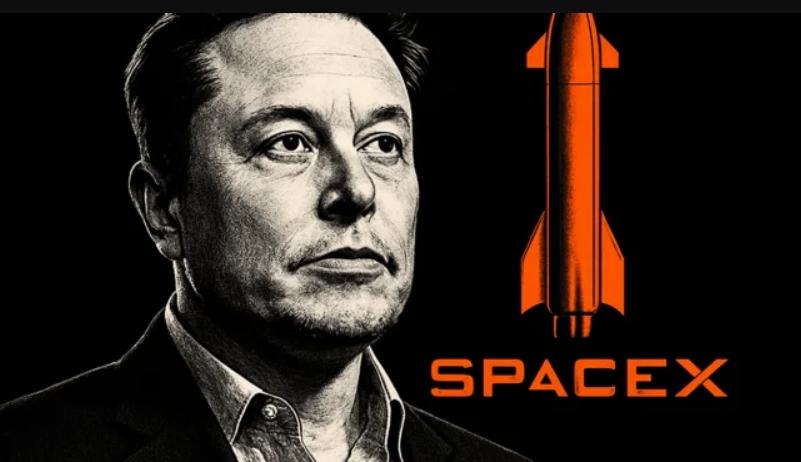
In 2026, two narratives are competing for investor capital more aggressively than almost anything else: artificial intelligence and the growing anticipation surrounding a potential SpaceX IPO.
The result?
Crypto liquidity is no longer the only game in town.
Capital Is Chasing the Hottest Story
Markets run on narratives.
A few years ago, crypto was the narrative.
Before that, it was electric vehicles.
Today, AI dominates financial headlines.
Investors who once allocated capital to speculative crypto assets are increasingly looking at AI infrastructure, semiconductor companies, cloud computing firms, and next-generation automation businesses.
When large amounts of money move toward one sector, another sector often feels the impact.
Crypto is learning that lesson again.
Why AI Stocks Are Attracting So Much Capital
The excitement around AI is not purely speculative.
Many companies are reporting real revenue growth linked to AI products and services.
That makes the story easier for institutional investors to justify.
Consider what many portfolio managers see today:
- Growing enterprise AI adoption
- Massive data center investments
- Expanding cloud demand
- Increasing corporate spending on automation
Compared with a meme coin promising future utility, the decision becomes obvious for some investors.
Capital tends to follow visibility.
AI currently has plenty of it.

The SpaceX Effect Nobody Is Talking About
Whenever investors discuss future IPO candidates, one name appears almost immediately.
SpaceX.
Even before any official public listing, speculation alone can influence market behavior.
Why?
Because investors start preparing.
Funds raise cash.
Institutions rebalance allocations.
Private market participants increase exposure where possible.
That process can reduce available liquidity elsewhere.
Including crypto.
Large capital pools are rarely unlimited.
When a potentially historic IPO enters the conversation, attention shifts quickly.
Crypto Is Not Crashing Because of One Reason
Many traders want a simple explanation.
One headline.
One villain.
One event.
Markets rarely work that way.
The recent weakness in crypto reflects multiple factors happening at the same time.
- Reduced speculative appetite
- Rotation into AI-related assets
- Higher competition for investor capital
- Profit taking after previous rallies
- Lingering macroeconomic uncertainty
Put enough pressure points together and liquidity starts drying up.
What Extreme Fear Usually Means
Fear is uncomfortable.
But it is also informative.
The crypto market tends to experience maximum pessimism near periods of exhaustion.
Not every fear cycle creates a bottom.
However, history shows that panic often appears long after most of the damage has already happened.
When traders begin discussing the end of crypto, the market is usually much closer to opportunity than they realize.
That does not guarantee an immediate recovery.
It simply means emotions are often a poor forecasting tool.
Could Liquidity Return to Crypto?
Absolutely.
Financial markets move in cycles.
Capital rotates.
Narratives evolve.
What attracts money today may lose momentum six months from now.
Crypto has survived multiple periods where investors declared it finished.
Then liquidity returned and sentiment changed almost overnight.
The same pattern could happen again.
The timing is the difficult part.
What Smart Investors Are Watching
Instead of obsessing over daily price swings, experienced investors tend to focus on broader signals.
They monitor:
- Institutional inflows
- Stablecoin growth
- Trading volume trends
- ETF demand
- Global liquidity conditions
These metrics often tell a clearer story than social media sentiment.
Price follows liquidity.
Liquidity follows opportunity.
That relationship has not changed.
FAQ
Why is crypto experiencing extreme fear in 2026?
Investor capital has been rotating into other high-growth sectors, particularly AI-related investments, while broader market uncertainty remains elevated.
Is the AI boom hurting Bitcoin?
Indirectly, yes. Capital allocated to AI opportunities is capital that may not be entering crypto markets.
How could a SpaceX IPO affect crypto liquidity?
Major IPO expectations can attract institutional attention and investment capital, reducing liquidity available for speculative assets.
Does extreme fear mean Bitcoin has bottomed?
Not necessarily. Fear can signal market exhaustion, but it does not guarantee a price bottom.
Can crypto recover if liquidity returns?
Historically, strong liquidity inflows have played a major role in driving crypto market recoveries.
Markets do not move based on technology alone.
They move based on where money wants to go.
Right now, AI excitement and SpaceX IPO speculation are attracting enormous attention from investors searching for the next big opportunity.
That does not mean crypto is dead.
It means crypto suddenly has serious competition.
And when competition for capital increases, weaker hands get shaken out first.
The investors who understand liquidity cycles are often the ones who stay calm while everyone else is focused on fear.