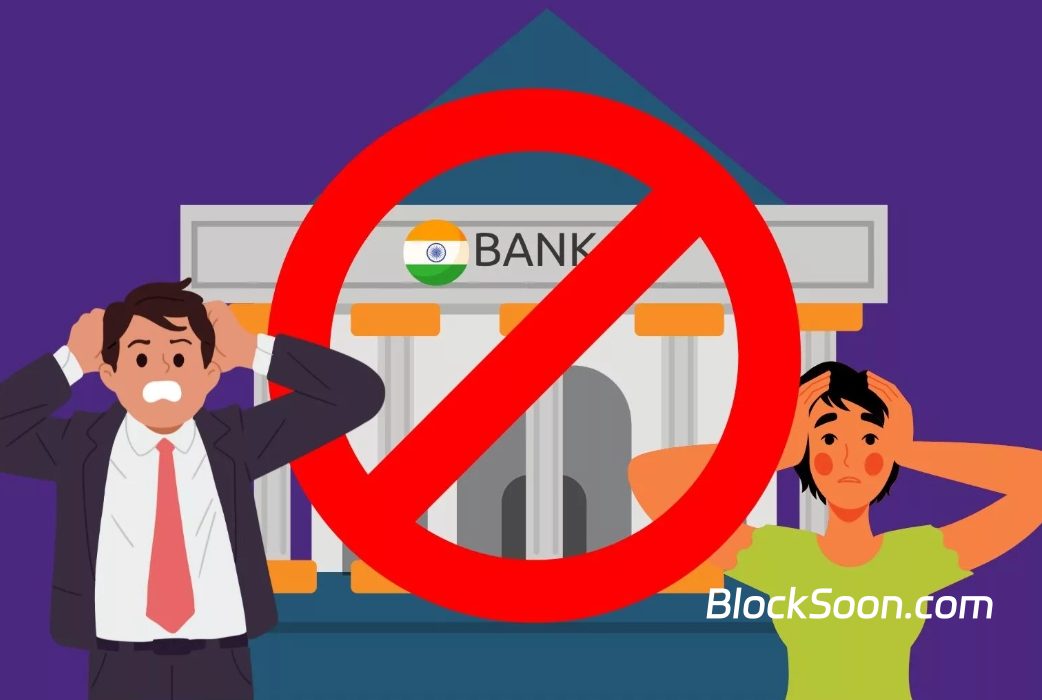
For cryptocurrency investors, nothing is more frustrating than opening a banking app to find your account restricted.
Unfortunately, this has become a widespread problem for cryptocurrency users in India.




You may have seen reports of this in Telegram groups.
A trader sold USDT through a P2P platform.
A few days later, the bank account received a complaint about suspicious transactions.
Suddenly, withdrawals stopped working.
Customer service began questioning the account.
The account was placed on a review list.
For many investors, this is more than just inconvenience.
It affects paychecks, household expenses, installment payments, and daily financial life.
Because of this, a growing number of Indian cryptocurrency users are actively seeking safer alternatives to traditional P2P trading.
Why Do Some P2P Transactions Create Problems?
The issue is not necessarily cryptocurrency itself.
The problem often comes from the source of incoming funds.
When using a peer-to-peer marketplace, money arrives directly from another individual.
Sometimes that sender may:
- Use a compromised account
- Be involved in fraudulent activity
- Become part of an unrelated investigation
- Trigger banking compliance alerts
Even if you acted honestly, your account can become caught in the review process.
That is the risk many investors underestimate.
The Hidden Cost of Frozen Accounts
Most people only think about trading profits.
Few think about the consequences of banking restrictions.
Imagine this scenario.
You are preparing for Diwali shopping.
School fees need to be paid.
An EMI deduction is scheduled next week.
Then your primary bank account becomes temporarily restricted.
The stress level rises immediately.
This is why reducing banking risk should be part of every crypto investor’s strategy.
Does This Mean P2P Is Illegal?
No.
P2P trading itself is not automatically illegal.
However, it carries counterparty risk.
The challenge is that you often know very little about the person sending money.
Even platforms with verification procedures cannot eliminate every risk.
Smart investors understand the difference between legal activity and low-risk activity.
The two are not always the same.
5 Safer INR Funding Alternatives Indian Investors Are Using in 2026
Let’s look at practical options that many users prefer when seeking a more structured funding experience.
1. Direct Bank Transfer Through Compliant Exchanges
One of the most straightforward options.
Many regulated exchanges support direct INR deposits through banking channels linked to verified user accounts.
Advantages include:
- Better transaction records
- Enhanced compliance procedures
- Clear deposit trails
- Reduced counterparty uncertainty
When funds move through established onboarding systems, documentation is generally easier to maintain.
2. IMPS-Based Exchange Funding
IMPS remains one of India’s most trusted payment networks.
Many investors already use IMPS for:
- Family transfers
- Business payments
- Emergency fund transfers
Using IMPS-supported exchange funding methods can create a more predictable banking experience compared with person-to-person settlements.
The speed is often a major benefit.
3. NEFT and RTGS Deposits
Some investors ignore these traditional banking methods because they are less exciting than instant payments.
That can be a mistake.
NEFT and RTGS transfers often provide:
- Clear banking records
- Strong audit trails
- Familiar banking processes
- Established compliance frameworks
Sometimes boring is actually safer.
4. Exchange-Integrated Fiat Gateways
Several major crypto platforms now work with licensed payment providers and regulated banking partners.
These gateways are designed specifically for:
- User verification
- Compliance monitoring
- Transaction transparency
For long-term investors, convenience and documentation often outweigh small differences in fees.
5. Recurring Verified Bank Deposits
Investors following a systematic investment approach increasingly prefer scheduled deposits.
Rather than making large unpredictable transfers, they:
- Deposit fixed amounts
- Maintain consistent records
- Simplify portfolio tracking
- Improve financial discipline
This strategy can also make tax reporting easier later.
What Should You Do Before Depositing INR?
A few simple precautions can prevent major problems.
Maintain Separate Records
Keep screenshots and confirmations for:
- Deposits
- Withdrawals
- Exchange transfers
- Wallet transactions
Good records can save enormous time if questions arise.
Complete KYC Properly
Many account issues begin because users rush through verification.
Ensure:
- Name matches bank account details
- PAN information is accurate
- Address information is current
Small discrepancies can create larger problems later.
Avoid Unnecessary Shortcuts
If someone offers:
- Faster settlements
- Unverified payment methods
- Off-platform deals
- Unrealistic discounts
Treat such offers cautiously.
In crypto, shortcuts often become expensive lessons.
Frequently Asked Questions
Can a bank freeze my account because of crypto?
Banks generally review transactions based on compliance and risk monitoring processes. Certain transactions may trigger additional scrutiny depending on circumstances.
Is P2P trading safe?
Many users successfully use P2P services. However, counterparty risk remains an important factor to consider.
Which INR funding method is safest?
There is no universal answer. Many investors prefer funding methods that provide clear documentation, strong compliance procedures, and transparent transaction histories.
Should I stop using P2P completely?
That decision depends on individual risk tolerance, banking preferences, and available alternatives.
The Smart Investor’s Perspective
The crypto market is already volatile.
There is no reason to add unnecessary banking stress on top of market risk.
Many experienced Indian investors are shifting their focus away from finding the fastest route and toward finding the most sustainable route.
That means:
✔ Better documentation
✔ Stronger compliance
✔ Reliable banking channels
✔ Lower counterparty exposure
Because protecting access to your bank account is just as important as protecting your crypto portfolio.
At the end of the day, a profitable trade means very little if you cannot comfortably access your own money.
For Indian investors navigating the crypto landscape in 2026, that may be the most valuable lesson of all.
True Paisa Vasool investing is not just about making profits.
It is about protecting them too.