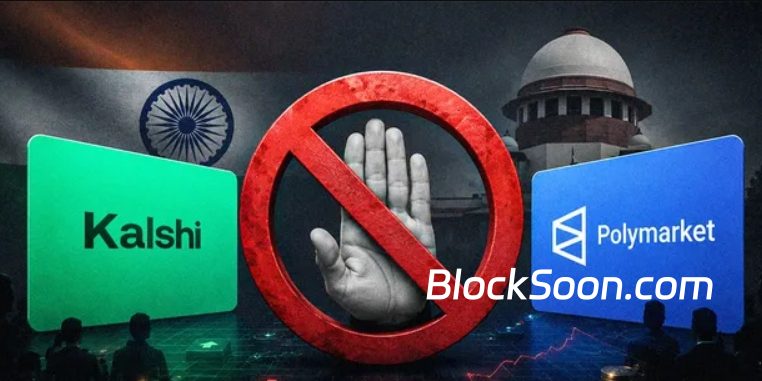
If you frequent Indian cryptocurrency Telegram groups, you’ve likely seen this question recently:
Why can’t I access Polymarket anymore?




Some users point the finger at regulators.
Others believe it’s due to payment restrictions.
Some even think it’s part of a broader anti-crypto movement.
But the truth is far more interesting than that.
For anyone involved in cryptocurrency, prediction markets, DeFi, or blockchain investments, understanding what’s happening can prevent serious confusion later.
First Things First: What Is Polymarket?
Polymarket is a blockchain-based prediction platform where users can speculate on future events.
These events may include:
- Elections
- Economic data releases
- Sports outcomes
- Technology launches
- Geopolitical developments
Instead of traditional betting, participants buy and sell market positions tied to specific outcomes.
Supporters argue that prediction markets create valuable information by aggregating public opinion.
Critics see them as a new form of online wagering.
That difference in interpretation sits at the heart of the current controversy.
Why Has Polymarket Become a Problem in India?
India’s regulatory environment has always treated financial products and gaming activities differently.
The challenge begins when a platform combines elements of both.
Prediction markets often sit in a grey area between:
- Investing
- Trading
- Speculation
- Gambling
For regulators, this creates a difficult question.
Is someone making a financial prediction?
Or placing a wager?
The answer is not always straightforward.
The Bigger Picture: India’s Expanding Digital Regulation Strategy
Many people think the issue is only about Polymarket.
It is not.
The real story is much bigger.
India has spent the past several years increasing oversight across multiple digital sectors:
- Online gaming
- Offshore betting platforms
- Crypto exchanges
- Cross-border financial services
- Digital asset trading
Authorities have become increasingly concerned about platforms operating outside domestic regulatory frameworks while still serving Indian users.
Prediction markets happen to be one part of that broader trend.
Why Regulators Are Watching On-Chain Derivatives Closely
This is where things become particularly important for crypto investors.
Many decentralized products now allow users to gain exposure to future outcomes without using traditional financial institutions.
Examples include:
- Event prediction markets
- Synthetic assets
- Decentralized derivatives
- Leveraged blockchain products
From a regulatory perspective, these tools can resemble financial instruments.
Yet many operate globally without a centralized headquarters.
That creates challenges involving:
- Consumer protection
- Tax compliance
- Anti-money laundering controls
- Financial market supervision
As adoption grows, scrutiny naturally increases.
A Question Many Indian Users Are Asking
Is Polymarket Illegal in India?
The answer is not as simple as a yes or no.
Regulatory actions can involve:
- Website access restrictions
- Compliance requirements
- Payment processing limitations
- Platform-specific enforcement measures
A platform may face operational restrictions without every aspect of its technology being formally prohibited.
This distinction often gets lost in social media discussions.
Why Indian Authorities Are Concerned About Offshore Platforms
Think about it from a policymaker’s perspective.
Millions of users.
Cross-border transactions.
Crypto-based settlements.
No local office.
Limited reporting obligations.
For regulators, this combination raises obvious concerns.
Authorities generally prefer platforms that:
- Follow domestic rules
- Verify customer identities
- Maintain compliance procedures
- Cooperate with legal requests
Many offshore crypto services struggle to fit neatly into those expectations.
What Does This Mean for Crypto Traders?
Do not assume the issue is limited to prediction markets.
The regulatory conversation increasingly includes all forms of blockchain-based financial activity.
That may involve:
Decentralized Derivatives
Products that replicate futures or options exposure without traditional brokers.
Event-Based Markets
Platforms allowing users to speculate on political, economic, or sporting outcomes.
Tokenized Financial Products
Assets designed to track real-world events or financial performance.
Synthetic Exposure Protocols
Systems that mirror price movements without direct ownership of the underlying asset.
As these sectors grow, regulatory attention is likely to grow as well.
The Tax Angle Nobody Talks About
Many investors focus on access restrictions.
The tax implications often receive less attention.
Yet authorities worldwide are becoming increasingly interested in:
- Cross-border crypto activity
- Offshore platform usage
- DeFi transactions
- Derivative trading profits
For Indian taxpayers, record keeping is becoming more important every year.
Whether profits come from Bitcoin trading, prediction markets, or decentralized derivatives, compliance expectations continue to evolve.
Why This Matters to Ordinary Indian Investors
Imagine a young software engineer in Bengaluru.
He trades crypto after work.
During Diwali, he discusses investments with family members.
His cousin mentions a prediction market platform.
A friend recommends a decentralized derivatives protocol.
Everything seems innovative and exciting.
Then suddenly platform access changes, regulations tighten, or compliance requirements increase.
Without understanding the legal landscape, investors can find themselves caught off guard.
That is why awareness matters.
Not fear.
Not panic.
Just awareness.
Frequently Asked Questions
Is Polymarket still accessible to Indian users?
Accessibility can change depending on regulatory developments, platform policies, and technical restrictions.
Is India banning all crypto platforms?
No. Regulatory scrutiny of specific services does not automatically mean a ban on the entire crypto sector.
Why are prediction markets attracting attention?
Because they often combine characteristics of finance, trading, and wagering, making regulation more complex.
Are decentralized derivatives under scrutiny too?
Yes. Regulators globally are paying closer attention to derivative-like products operating through blockchain networks.
Should investors be concerned?
Investors should stay informed, understand the platforms they use, and remain aware of evolving regulatory requirements.
The Real Truth Behind the Headlines
Many headlines suggest a simple battle between innovation and regulation.
Reality is more nuanced.
India is not just examining Polymarket.
The country is attempting to define how blockchain-based financial products fit into an increasingly regulated digital economy.
Prediction markets happen to be one of the first major tests.
The outcome could influence how future products are treated, including decentralized derivatives, synthetic assets, and other emerging crypto innovations.
For Indian investors, the lesson is clear:
Innovation moves fast. Regulation eventually catches up.
Those who understand both sides of the story will be better positioned to navigate whatever comes next.
And that, as every smart investor knows, is true Paisa Vasool knowledge.